
Fullcast Pay Commissions Platform
Role
Design lead for the Fullcast Pay product experience, from filtering opportunity data to fully processed and paid commissions with transparent record auditing and reporting.
Skills
UX/UI Design
User Research & Testing
Tools
Figma
Figma Make
Claude Code
The Problem
With the acquisition of Commissionly, Fullcast now has a full-featured commissions processing engine. The next step was to integrate with the existing platform and utilize the Fullcast platform to fully automate the commission processing at scale.
Commissionly did one thing very well and that was process commissions. What it didn’t do well was parse opportunity data, assign payees, and properly attribute commissions which for the most part were a manual processes, requiring users to input data or upload spreadsheets. We needed to automate the data ingestion present that data to the commissions engine, as well as add an auditing layer over the top of the end-to-end experience so users could view the history of any processed transaction record at any point in its life-cycle within the platform.
The Process
We identified the key product pillars of the platform and focused on automating the delivery of data to the commissions engine, and auditing the output from that processing
Credit Rules
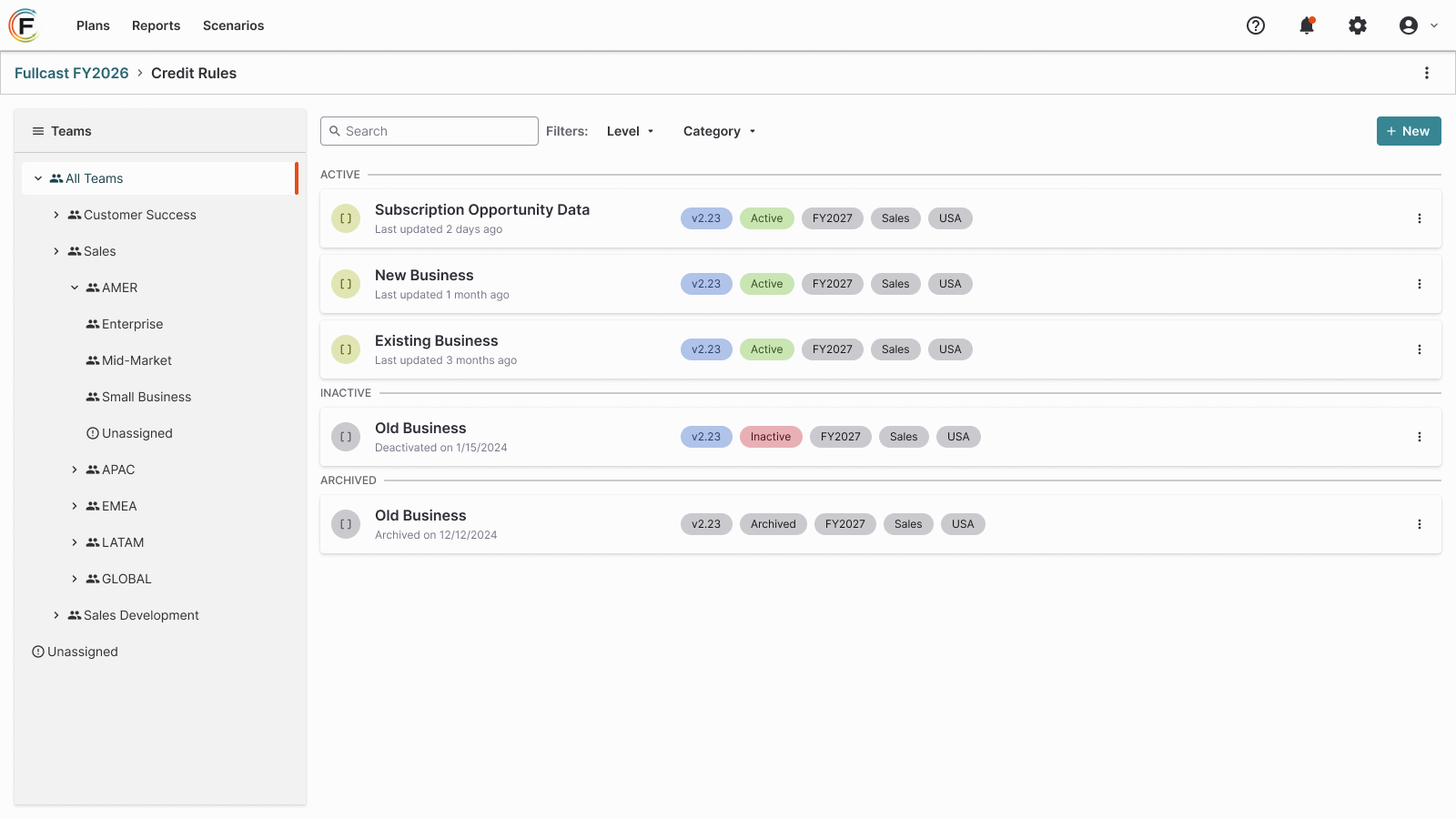
A rules engine (Crediting Rules) that could parse opportunity data from a CRM and transform those opportunities into transaction records with customizable fields and payees that could be used by the appropriate compensation plan to process commissions.
Compensation Plans
We needed to build a new experience for creating compensation plans within the Fullcast platform that utilized the backend processing engine from Commissionly. This was an opportunity to re-imagine the commission building experience from the ground up.
Commissions Ledger
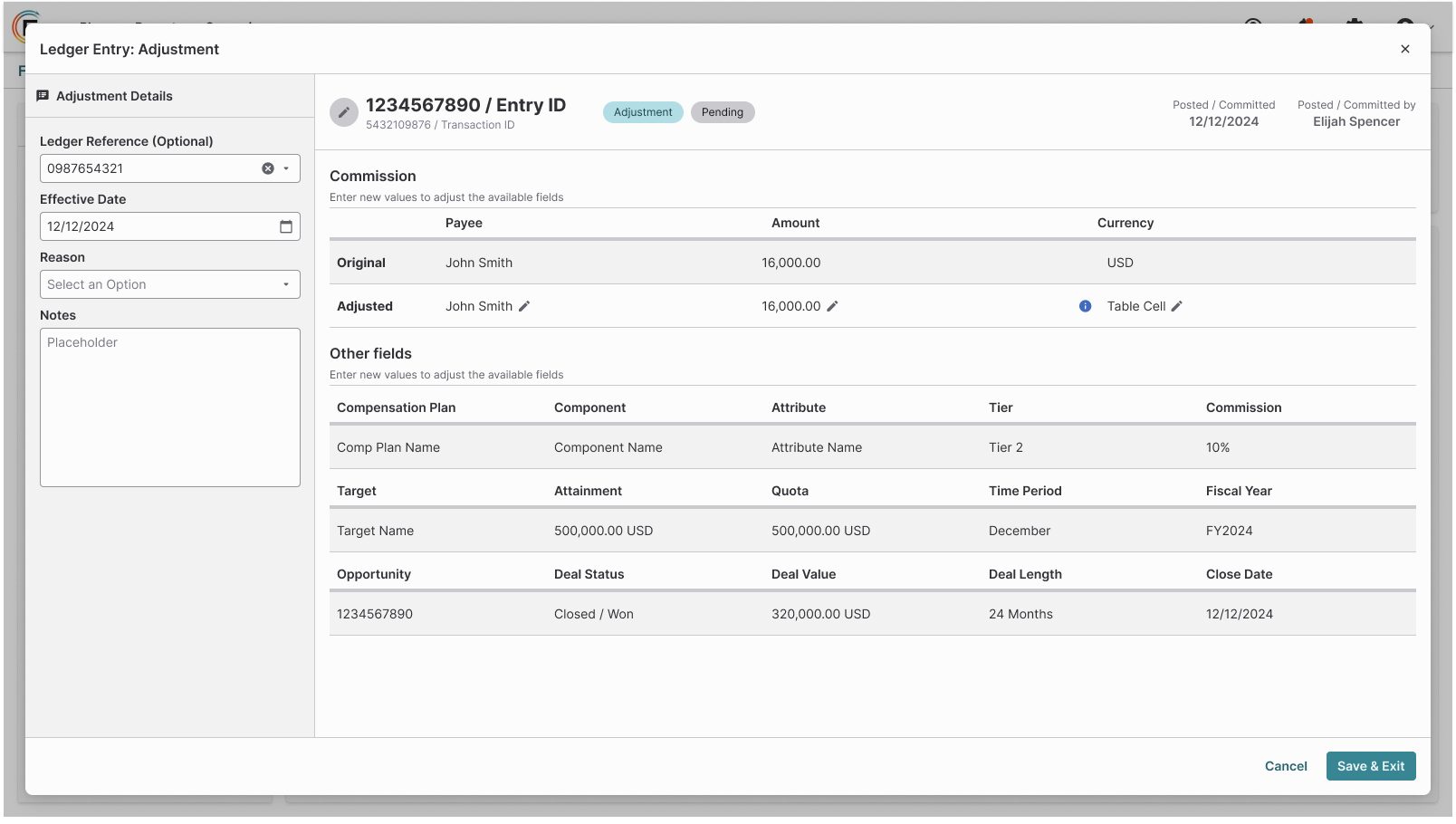
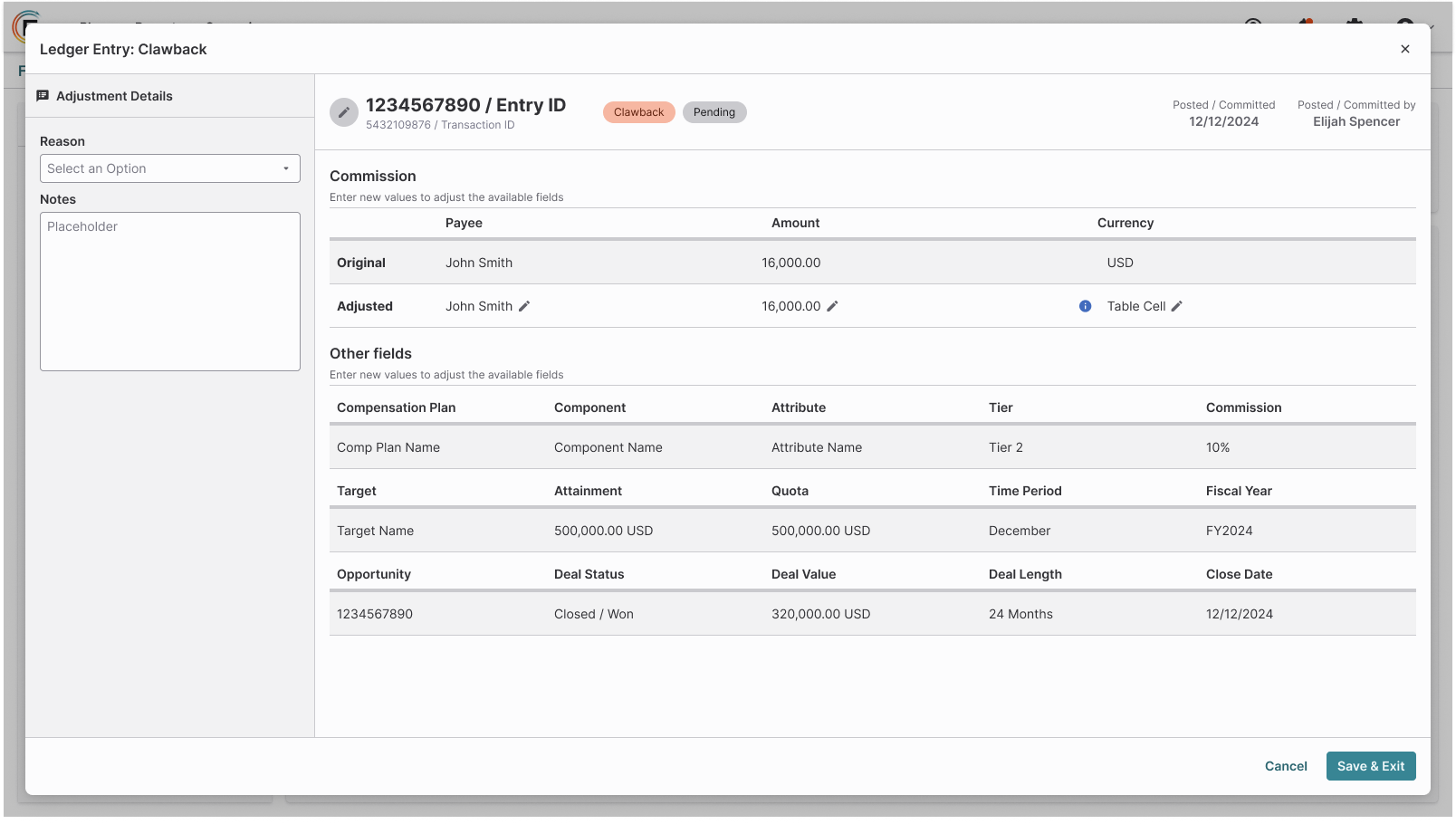
The ledger is important for transparency through the Fullcast platform, allowing customers to audit any transaction and granting the ability to add multiple types of adjustments to the existing transactions
The Rules Engine
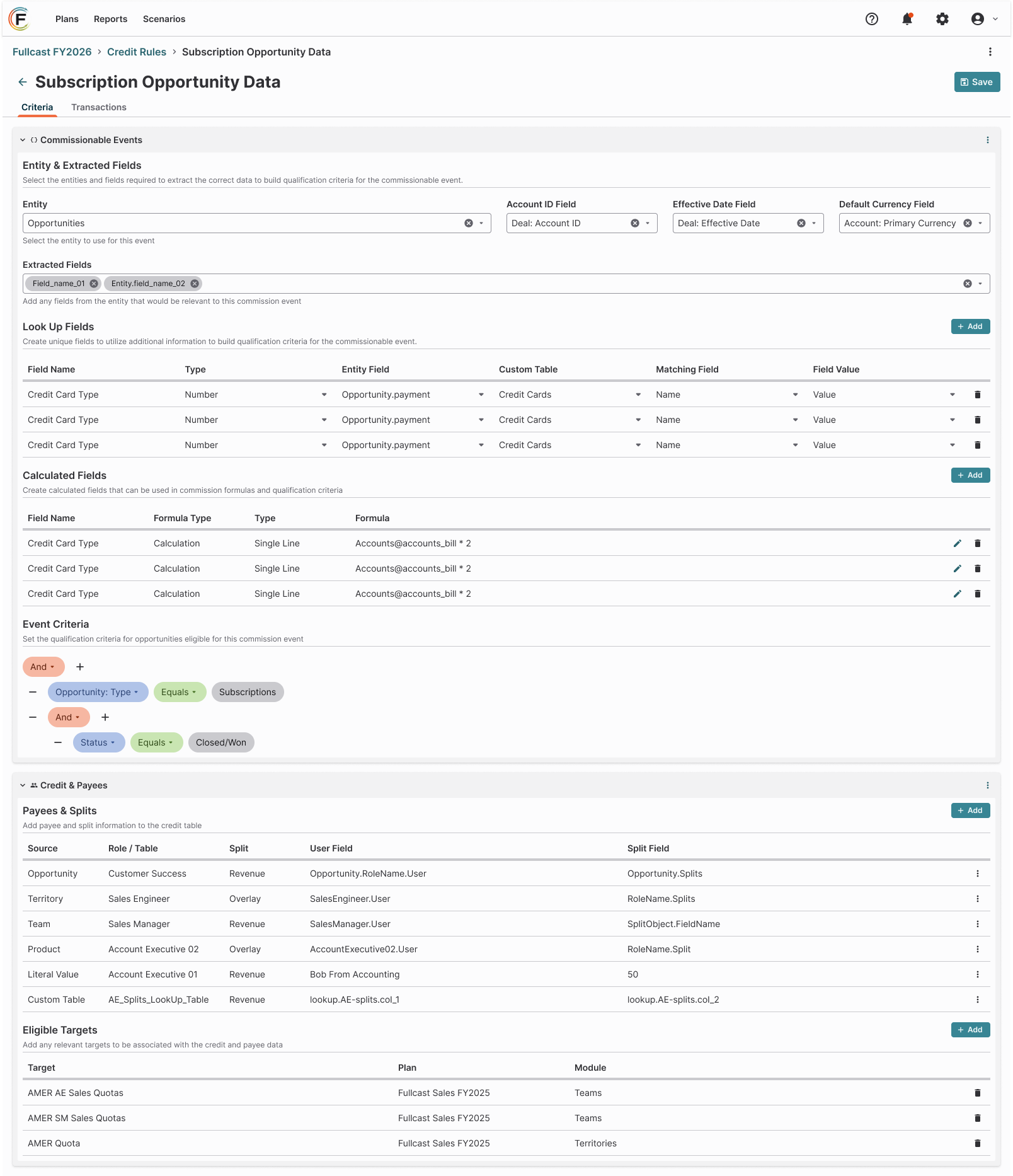
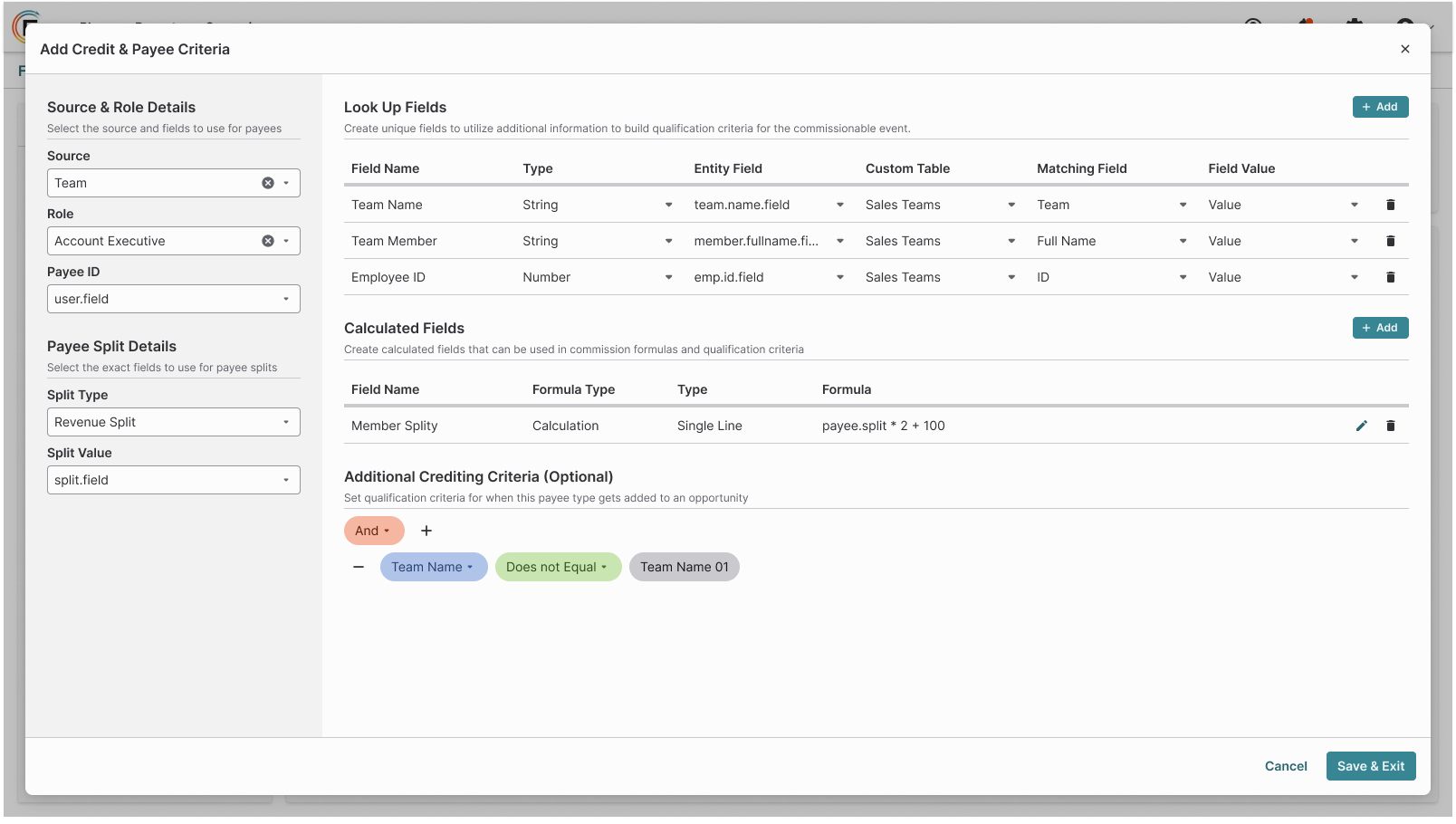
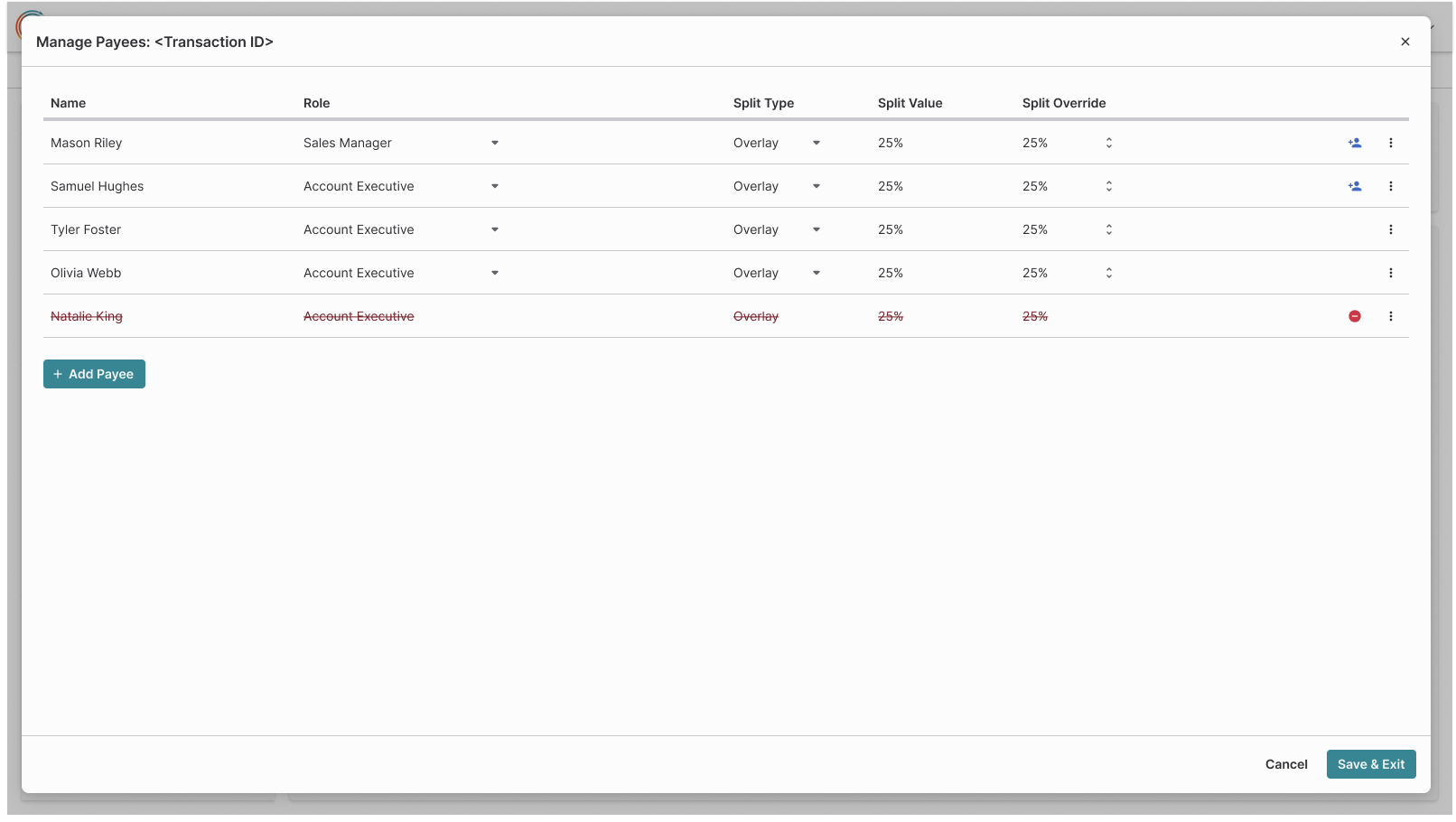
There is so much data associated with CRM opportunities, that to carry anything but the most crucial data would cause massive performance issues in processing the records. So we gave users the ability to filter opportunities based on specific criteria, then within that set of opportunities, they can further pair down the information to the potential payees and any additional data fields they choose to extract from the original opportunity to create the new transaction record. Note that the original data was not modified in any way during this process, only used to create a new record with an association to the original opportunity.
One challenge was that for some customers, specific information wasn’t always stored with the opportunity data, an example being split values for payees or complex formulas that needed to be applied to specific fields. Another was that customers also had proprietary formulas for how some aspects of their commissions work, and needed a way for those to be used within the commissions platform.
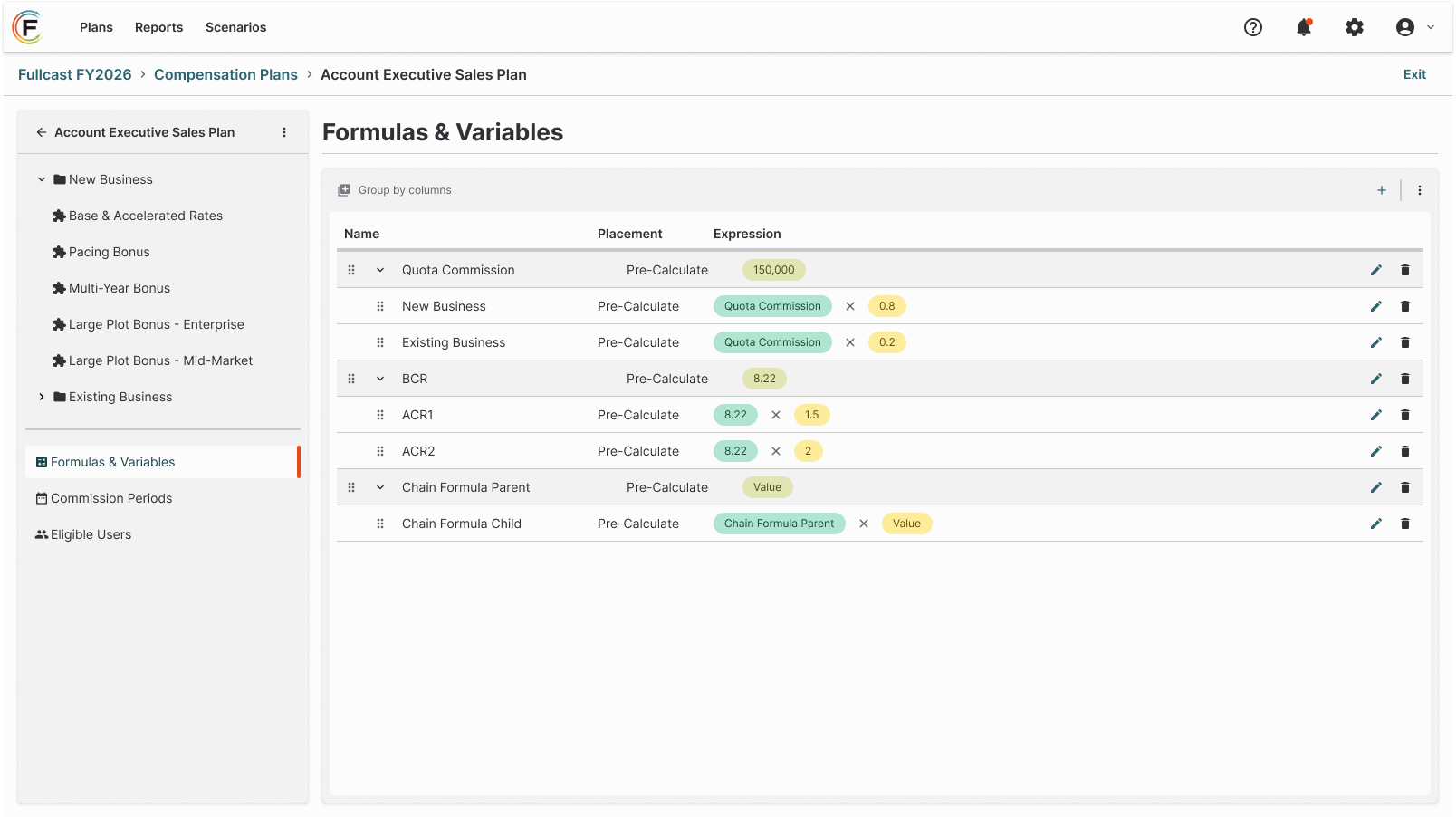
Our solution to those challenges were the implementation of both custom and calculated fields which allow customers to utilize this external data by bring it into the application and using it to add variables into the processing of commissions.
The Compensation Plans
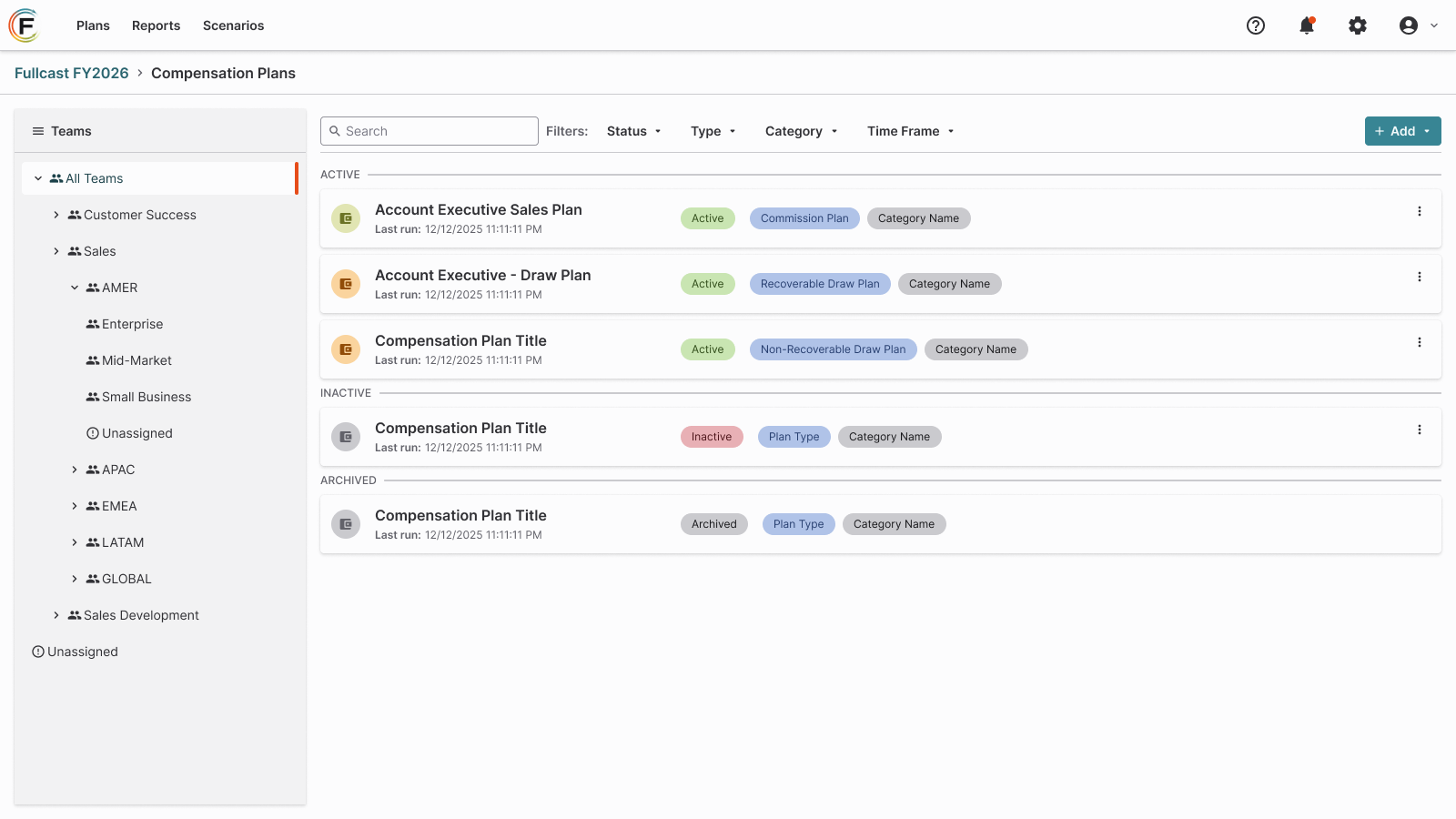
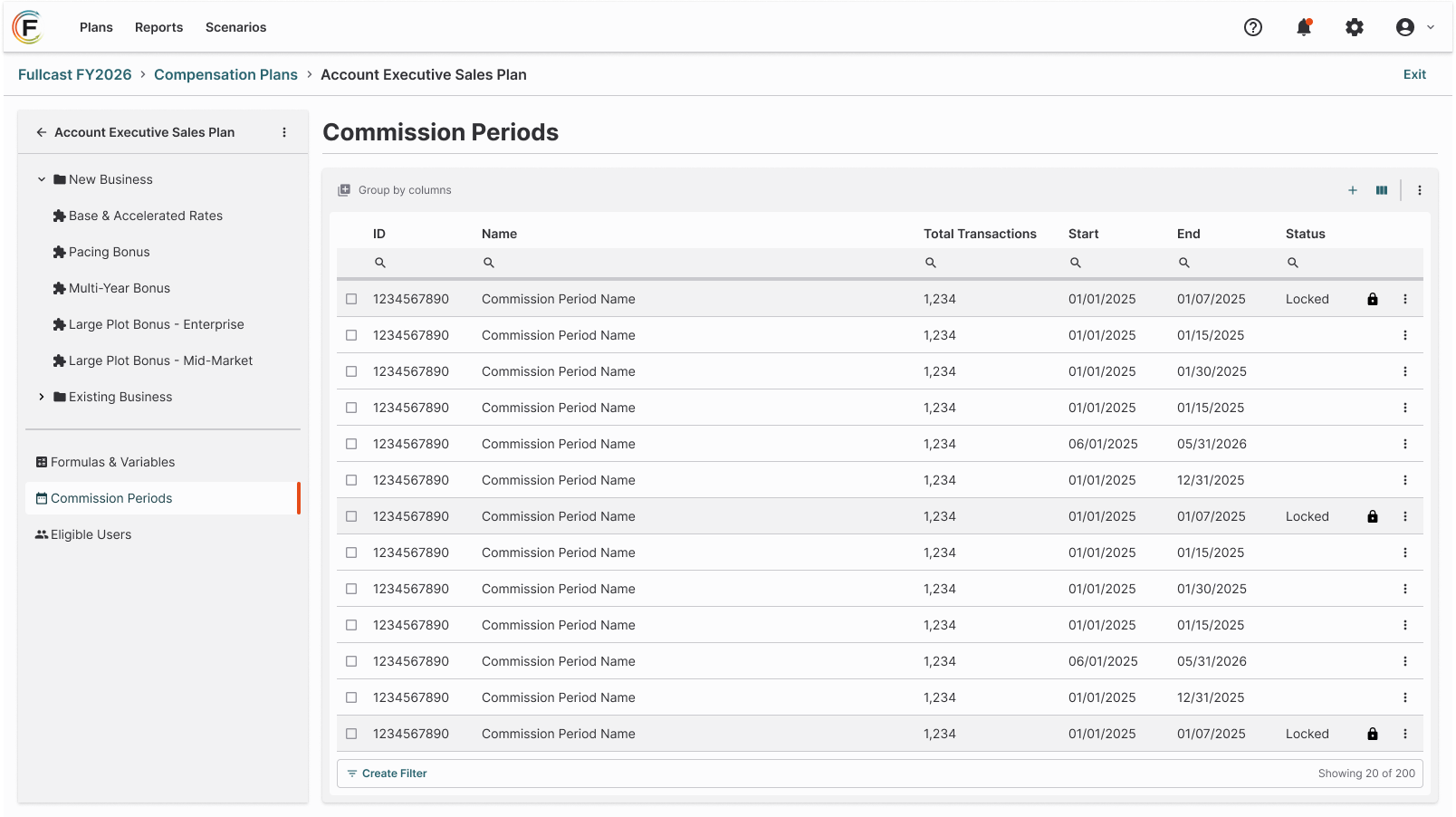
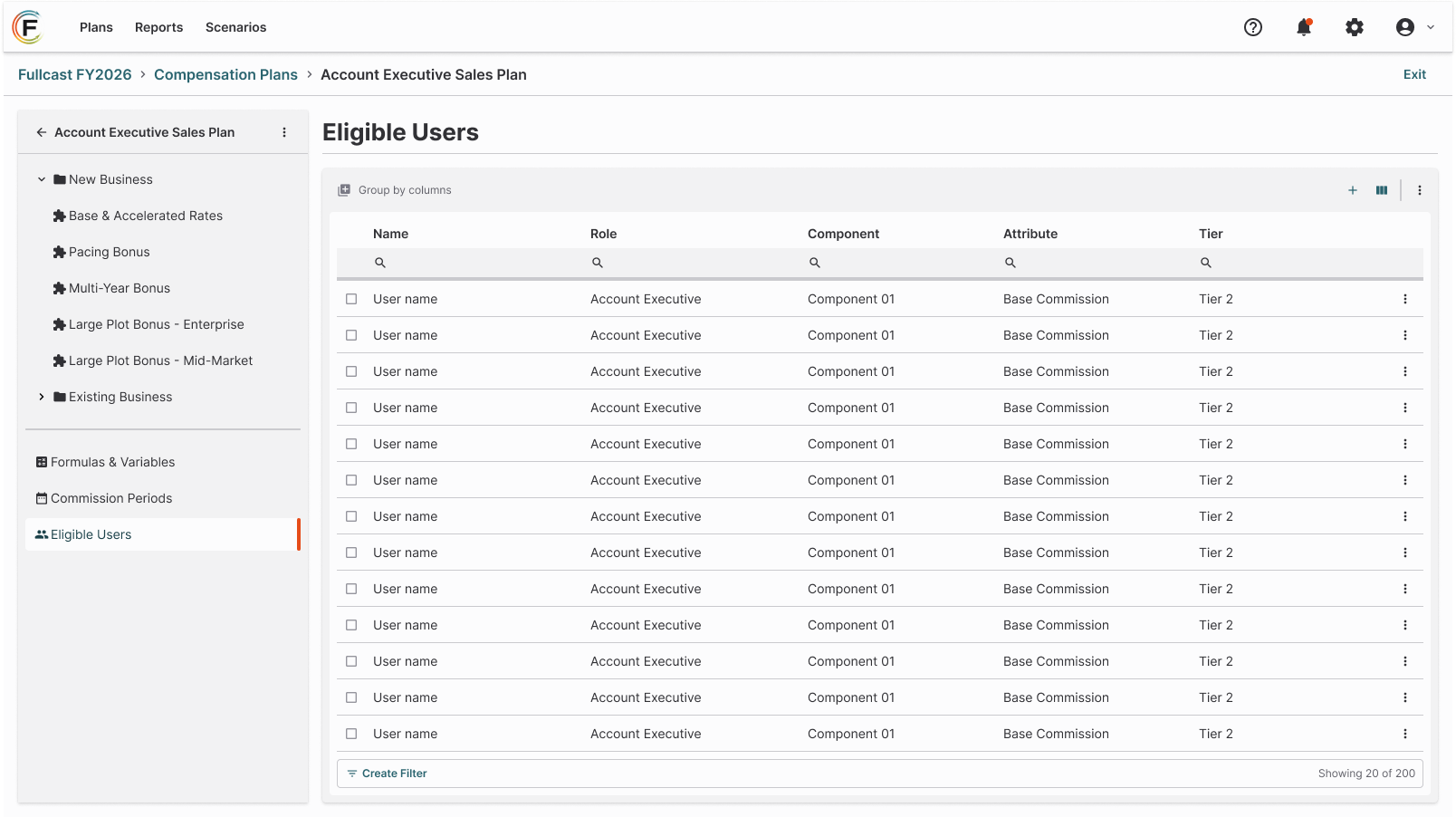
Comp plans for short, are a structured framework for outlining how an organization rewards specific groups of employees. In many cases our customers were still managing the calculations for individual commissions or draws in spreadsheets or using other software or paying for services just to manage compensation plans.
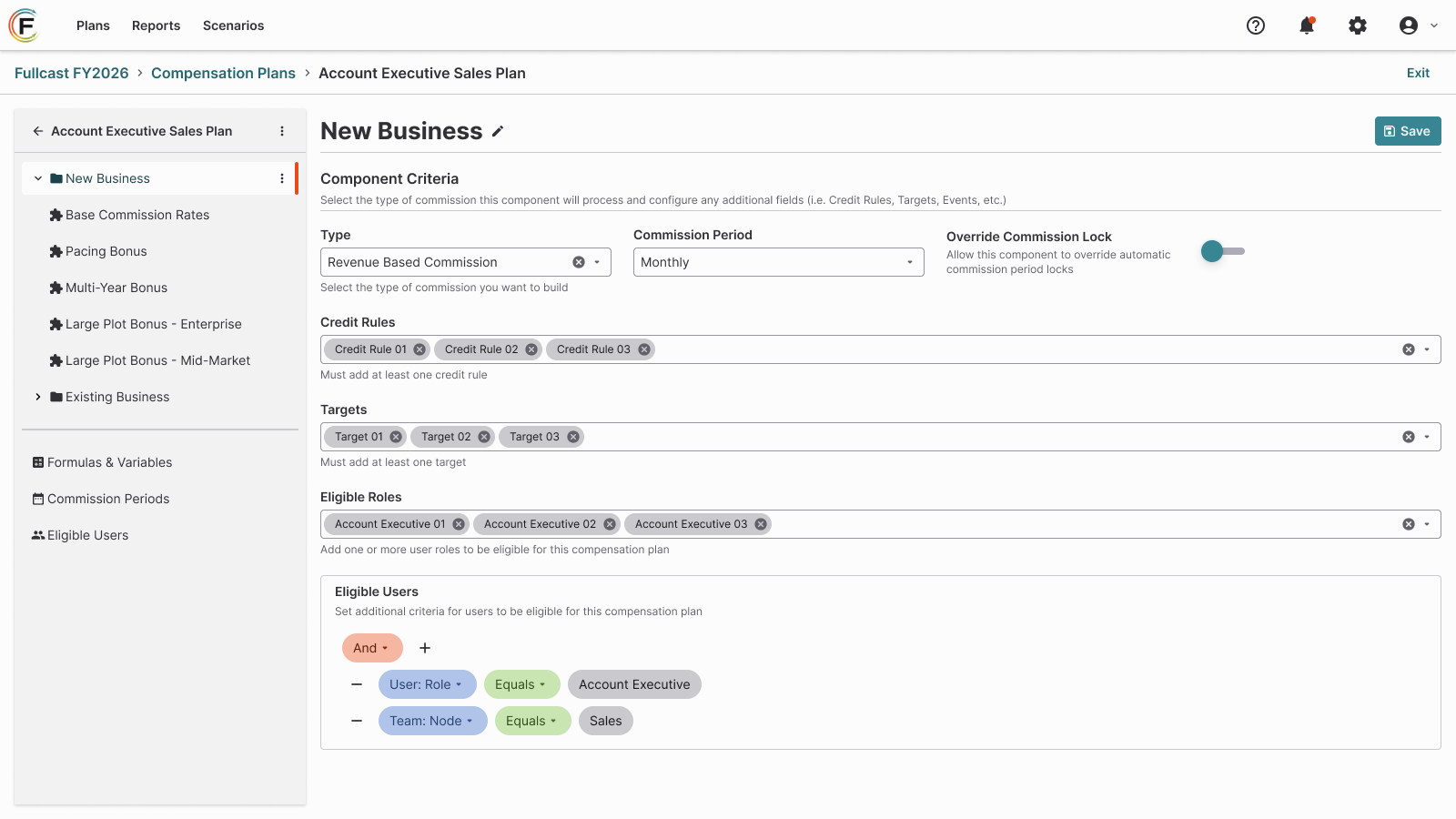
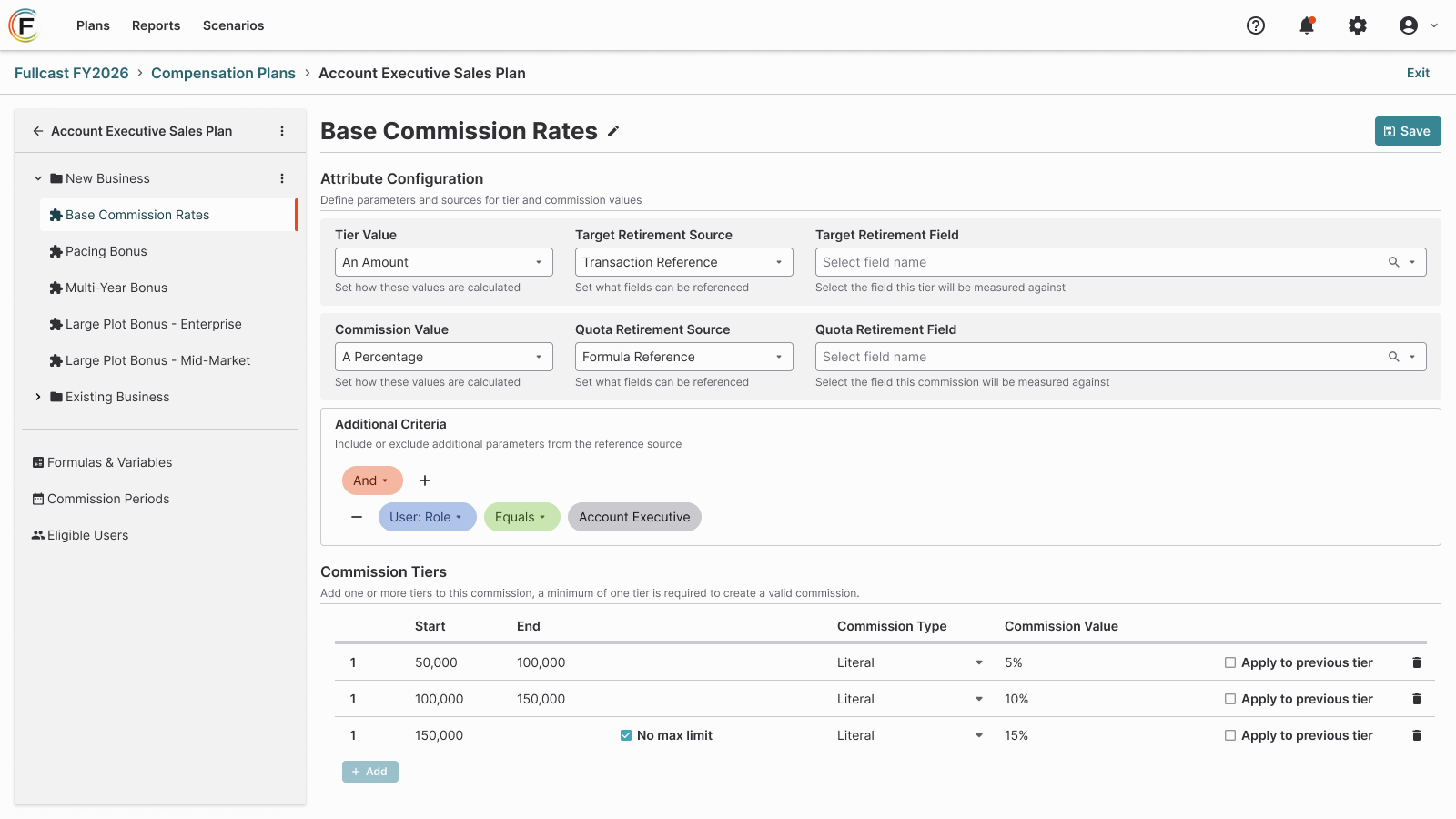
Our compensation plans had to be open ended to allow our customers to effectively build out or transfer their proprietary calculations and variables into our system as well as filter down what transaction records would be processed by the compensation plans.
There are three types of plans available, commission plans, and recoverable and non-recoverable draw plans. Commission plans cover the range of all types of payouts to individuals, standard commissions, accelerators, bonuses, SPIFFs, etc.
The draw plans handled other situations where money could be withheld or withdrawn from an individual based on specific criteria or performance of that individual.
Within these plans, users have access any formulas or variables created in any other plan as well as the ability to create new ones. Users can set and manage the time periods in which each plan is processed and manage the eligible individuals for that commission plan.
The Commissions Ledger
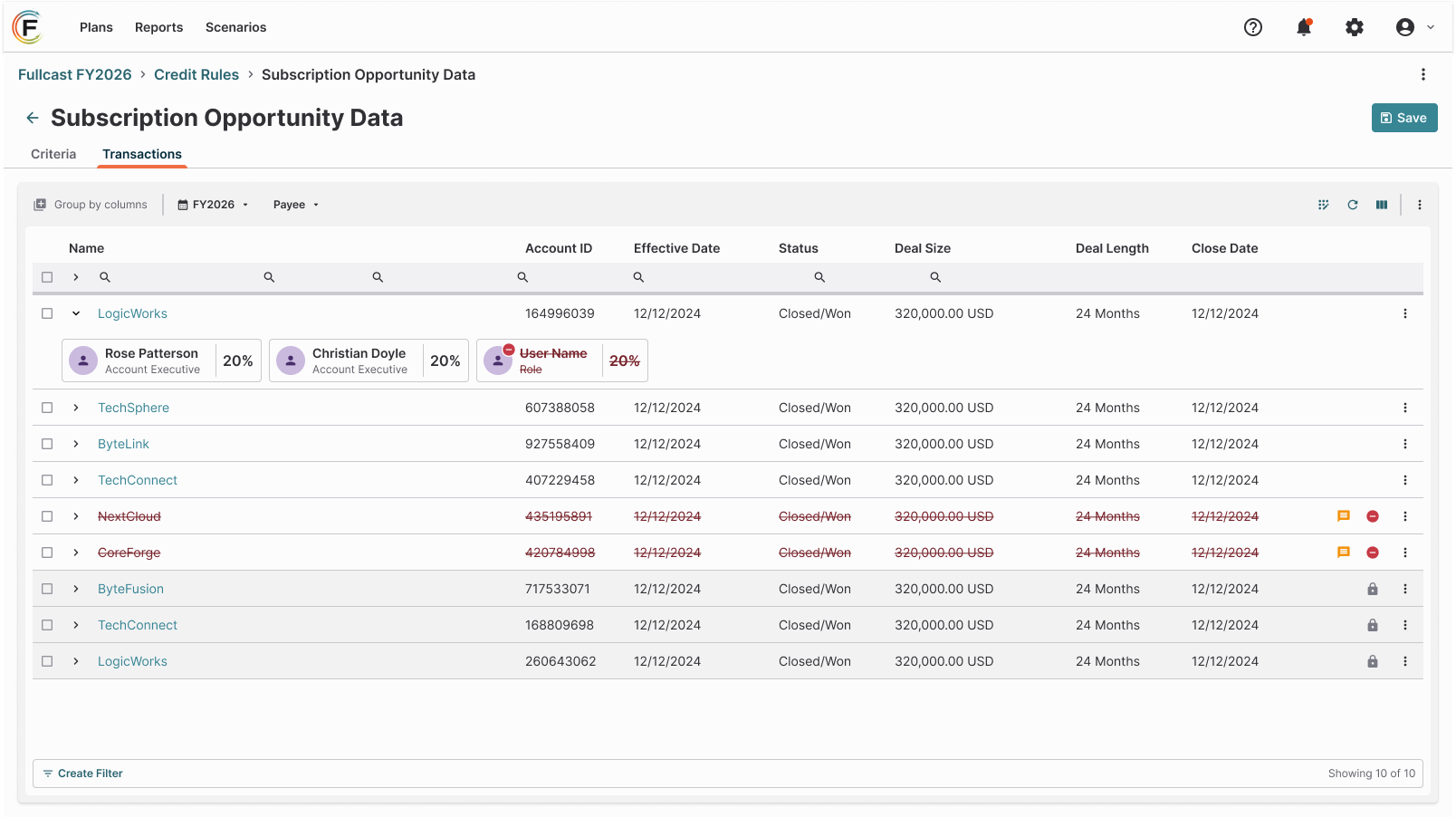
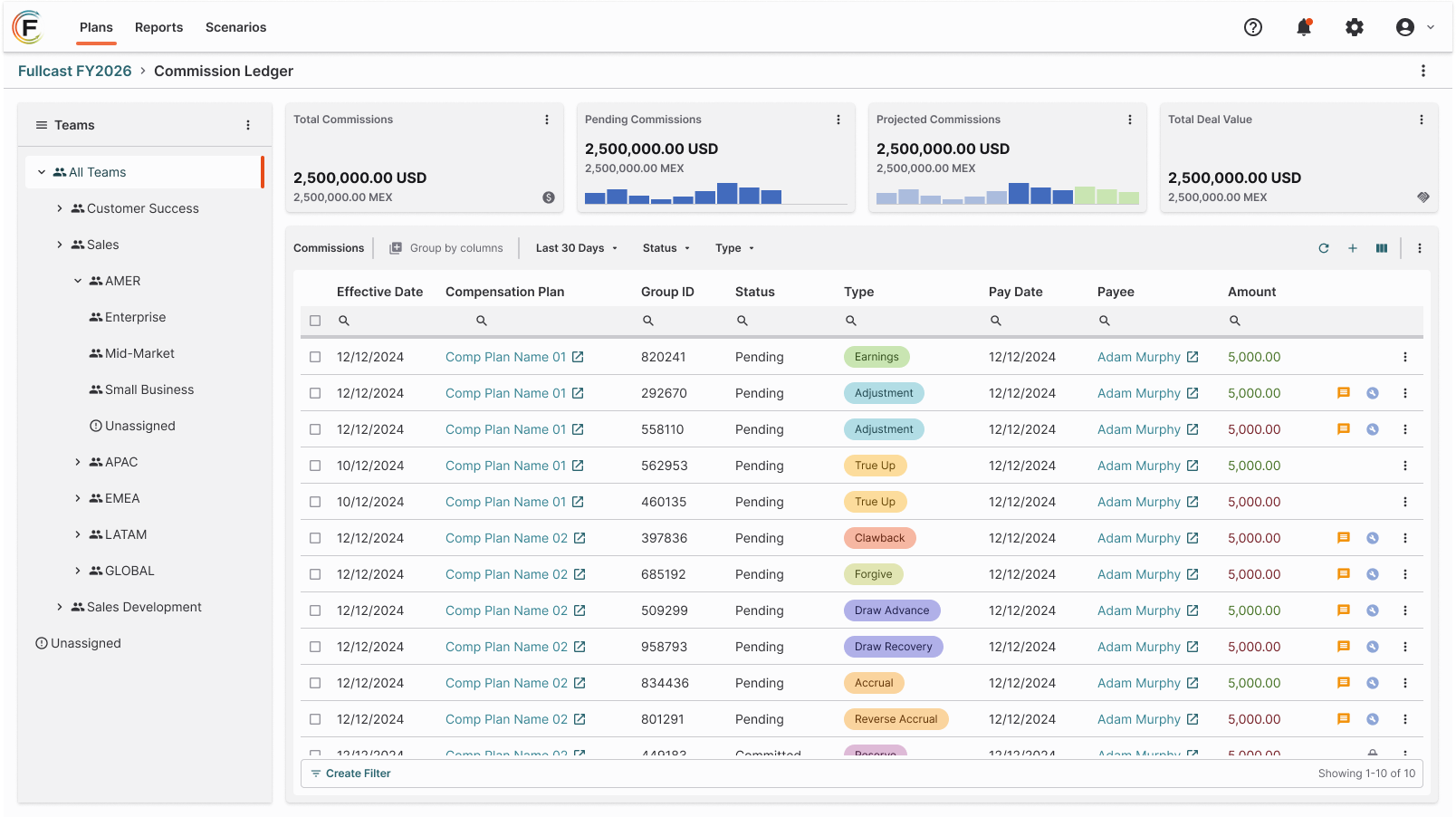
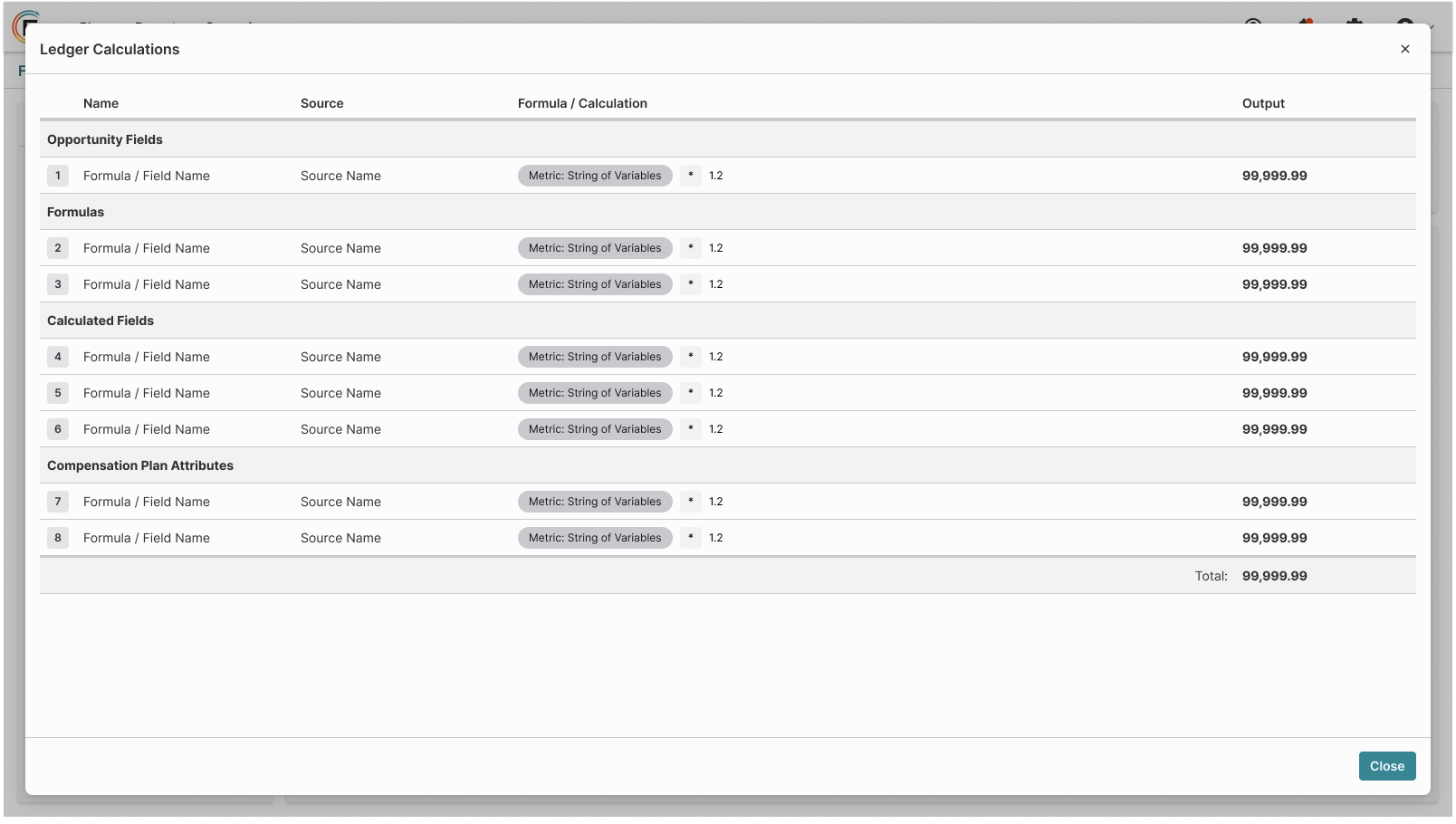
The ledger displays the end results of the processed transactions records, each commission can be traced back to its original transaction record and the user can see a detailed history of each calculation made to create the end result.
The user has the ability to filter down on specific groups based on the territories, teams, or products modules. As this ledger will have tens of thousands of records from a larger company, the need for granularity in auditing is crucial.
From the commission ledger a user can edit, adjust, or create new types of entries based off of and existing record. The ledger has built-in restrictions on entries that have already been processed to prevent major account issues. while a user is not allowed to edit any processed entries, they do have the ability to create a new entry based off that locked one to make adjustments if needed.
The Results
The successful addition of a new product for the Fullcast product suite providing customers with one platform to process and manage commissions for their employees. Removing the need for multiple offline spreadsheets and or programs to push data through that also stayed updated in parallel with the customers revenue operation plan.
A 15% increase in revenue from upsells and new customers in the first 6 months of the product launch and the highest NPS score for a new product in the companies history after the first year.